
We often hear that energy improvement works make a property easier to rent. That’s false ❌
At a constant rent, it’s true. But in reality, it’s false.
Because when we talk about energy renovation, what we generally have in mind is also, and above all, raising the rent or recouping the investment over the long term. And that’s where the shortcut becomes misleading.
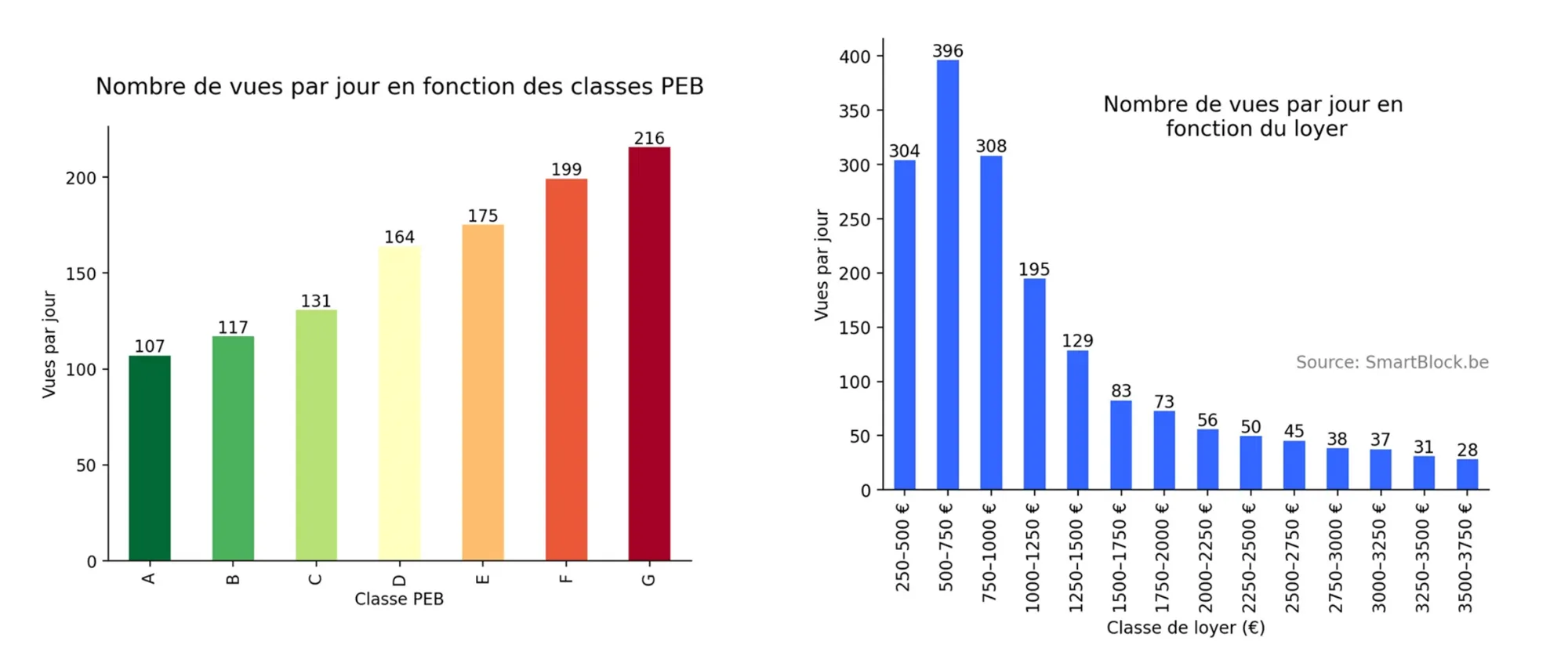
📊 What the data shows We analysed the number of views per day generated by a listing during its first week online.
Two very clear findings emerge from the figures (see images): 1️⃣ The number-one driver of demand is not the EPC (PEB, “peb”), it’s the price: the higher the rent, the fewer views and favourites a listing generates. The relationship is direct and very pronounced. 2️⃣ Properties with the worst EPC ratings generate the most interest.
Why? These properties are simply cheaper. 👉 In other words, it’s not the poor EPC rating that attracts applicants, 👉 it’s the (low) rent level it’s associated with.
Saying that renovating a property’s energy performance generates more demand is true… as long as the rent isn’t raised. Yet in practice, renovation works are almost always accompanied by a price increase, which cancels out the positive effect of a better EPC rating on demand.
🔎 So what are energy renovations really useful for? ✅ Attracting “higher quality” tenants ✅ Increasing the value of the asset ✅ Reducing the debt ratio (through value creation, if it exceeds the cost of the works)